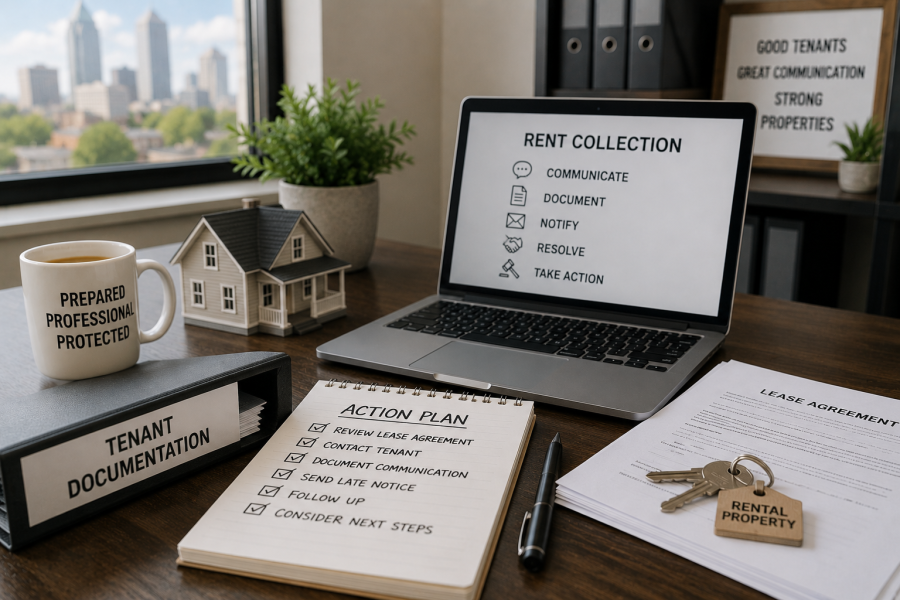
A tenant missing rent can put immediate pressure on your rental property. Mortgage payments, insurance, taxes, repairs, and utilities do not stop just because rent did not come in.
For Indianapolis rental property owners, the key is not to panic, but also not to ignore the issue. Indiana Property Management Group LLC works with rental owners across Central Indiana, and late rent is one of the most common problems landlords ask about. The right response starts with communication, documentation, and a clear process.
Key Takeaways
- Late rent needs a fast response because delays can make the situation harder to control.
- Not every late tenant is the same, so landlords should separate a first-time issue from a repeat payment problem.
- Clear communication with every leaseholder and cosigner can prevent confusion and missed accountability.
- Proper documentation protects the landlord if the situation moves toward legal action.
- Strong screening and lease enforcement reduce the chances of chronic nonpayment.
Start With Clear Communication
When rent is late, the first step is to communicate quickly. That does not mean being aggressive. It means confirming the tenant understands rent has not been received and asking what is going on.

Sometimes a late payment is a simple mistake. A tenant may have changed banks, forgotten the due date, or had a short-term issue with payroll. Other times, late rent is the first sign of a bigger problem.
A good first message should include:
- The amount due
- The date rent was due
- Any late fees that apply under the lease
- A clear deadline for response or payment
- A reminder of the lease terms
Keep the message professional and direct. Avoid emotional language. The goal is to get information, create a record, and make it clear that the issue cannot be ignored.
Rental income is a major part of the investment equation, especially when owners are also managing mortgage payments, repairs, taxes, and insurance. Owners should treat rent collection as part of the financial structure of the property, not as an awkward personal conversation. Good records also matter because rental income is generally treated as taxable income.
Know the Difference Between a First-Time Issue and a Pattern
A first-time late payment and a repeat offender should not be handled the same way.
If a tenant has always paid on time and is communicating, a reminder may be enough. You still need to document everything, but there may be room to resolve the issue without escalating immediately.
A repeat late payer is different. If the tenant has a history of missed deadlines, partial payments, excuses, or silence, it is usually time to move faster. In that case, many landlords should skip the friendly reminder stage and move directly to a formal notice.
That notice should clearly state:
- What amount is owed
- When payment must be made
- What happens if payment is not received
- How payment should be submitted
This is where a well-written lease matters. If your lease is vague, inconsistent, or missing key rent collection terms, enforcement becomes harder. Strong lease terms and good tenant placement go hand in hand, which is why tenant screening tips for Indianapolis rentals should be part of the process before handing over the keys.
Communicate With Every Responsible Party
If there is more than one person on the lease, contact everyone. If there is a cosigner, contact the cosigner too.
This step is easy to overlook, but it matters. One roommate may think the other roommate paid. A cosigner may have no idea the tenant is behind. A tenant may be avoiding the conversation because they are embarrassed or hoping to buy time.
Every person who is legally responsible for the lease should know:
- Rent is late
- The exact balance owed
- The deadline to fix the issue
- The next step if payment is not made
This also helps protect you from claims that someone “didn’t know” about the problem. Keep written records of all notices, emails, texts, and phone call summaries.
Document Everything From the Beginning

Landlords often get into trouble because they wait too long to start documenting. By the time they realize the tenant will not pay, the paper trail is weak.
Good documentation includes:
- Lease agreement
- Rent ledger
- Payment history
- Late notices
- Emails and text messages
- Notes from phone calls
- Copies of any payment plans
- Records of partial payments
This documentation matters if the situation later moves to court. It also helps you make better decisions. Instead of relying on memory, you can look at the record and see whether the tenant is usually reliable or whether this is becoming a pattern.
Even if you want to work with the tenant, keep the records clean. A kind response and a professional process can exist at the same time.
Be Careful With Payment Arrangements

Some landlords offer payment plans when a tenant falls behind. That can work in certain situations, but it needs to be handled carefully.
Before agreeing to anything, ask yourself:
- Has this tenant paid reliably before?
- Are they communicating clearly?
- Can they realistically catch up?
- Does the agreement create more risk for you?
- Are you accidentally training the tenant to pay late?
If you agree to a payment arrangement, put it in writing. Include the amount due, exact payment dates, and what happens if the tenant misses the arrangement. Do not leave it open-ended.
A rental property is still an income-producing asset, so payment decisions should be based on the lease, the tenant’s history, and the owner’s risk tolerance. That mindset matters because real estate is commonly evaluated as an investment asset, not just a property someone happens to own.
Know When To Move Toward Formal Action
If the tenant does not respond, does not pay, or repeatedly breaks promises, you may need to move toward legal action.
In Indiana, landlords may be able to handle certain eviction matters through small claims court, but that does not mean every owner should do it alone. Eviction rules, notice requirements, filings, timelines, and court procedures can create problems if handled incorrectly.
If the situation reaches that point, speak with a qualified attorney. This is especially important if:
- The tenant is disputing the balance
- The tenant has made habitability claims
- There are multiple leaseholders
- The tenant has made partial payments
- You are unsure whether your notices were handled correctly
- You have never filed an eviction before
For rental owners dealing with this stage of the process, tips to evict an Indianapolis tenant may help clarify what to think about before taking the next step.
Do Not Let Fear of Confrontation Control the Process
Many landlords wait too long because they do not want conflict. That is understandable, but it can become expensive.
A rental property is a business. You can be respectful and still enforce the lease. You can be professional and still set deadlines. You can care about the tenant’s situation and still protect your property.
The longer unpaid rent continues, the harder it may be to recover. Delays can also create bigger financial pressure if the tenant eventually moves out owing rent, leaves damage behind, or forces a longer vacancy.
This does not mean landlords should rush into conflict. It means they should have a process and follow it.
Prevention Starts Before the Lease Is Signed
The best rent collection strategy starts before the tenant moves in.
Good screening helps reduce risk. A strong lease gives you the ability to enforce expectations. Clear rent collection policies tell tenants what happens when rent is late. Consistent follow-through shows that the lease matters.
Important prevention steps include:
- Verifying income
- Reviewing rental history
- Checking credit and background information where allowed
- Calling previous landlords when possible
- Requiring complete applications
- Using a clear written lease
- Explaining payment rules before move-in
- Enforcing policies consistently
No screening process can predict every tenant’s future behavior. Job loss, family changes, medical bills, and other life events can happen. Still, a structured process lowers the chances of placing a tenant who is likely to become a chronic problem.
Local market conditions also matter. Rental demand, household income, and housing costs can all affect tenant behavior and owner expectations. In Indianapolis, population and housing data provide useful background when evaluating the broader rental market.
When Professional Management Makes Sense
Some owners are comfortable handling late rent, notices, tenant calls, documentation, and legal coordination. Others quickly realize it is draining.

Professional management can help by creating distance between the owner and the tenant. That matters because rent collection is easier when it follows a consistent policy instead of becoming a personal negotiation every month.
A property manager can help with:
- Tenant screening
- Lease enforcement
- Rent collection
- Late notices
- Tenant communication
- Documentation
- Attorney coordination when needed
- Move-out and turnover planning
For owners who do not want to manage these issues alone, property management services in Indianapolis can make the rental feel more like an investment and less like a second job.
Final Thoughts
Late rent needs to be handled quickly, calmly, and professionally. Start with communication, document everything, contact every responsible party, and know when it is time to move beyond reminders. Indiana Property Management Group LLC helps Indianapolis rental owners create systems that reduce late rent issues and protect the long-term performance of their properties.
Legal note: This information is for general educational purposes only and should not be treated as legal advice. If you are dealing with a tenant who has not paid rent or you are considering eviction, speak with a qualified Indiana attorney before taking legal action.
